

Guest blog by Sheena Dowse, Drama Leader, Strachur Youth Drama
I’m Sheena Dowse, and I’m a volunteer youth drama leader in Strachur. I’ve been doing this for around 16 years now, so everything I’m talking about today comes from lived experience rather than theory. I’m very passionate about community spaces, particularly village halls, and the role they can play in young people’s lives, not just when they’re children, but as they grow into young adults.
Strachur Youth Drama began quite organically. Like many rural parents, I spent years travelling up and down to Glasgow trying to find suitable performing arts opportunities for my daughter Kirstie. There just wasn’t anything local. Then I was asked to help some children prepare for a Stars in Their Eyes concert, and it became very clear very quickly that there was a real appetite for something creative closer to home.
The village hall was the obvious place. It sits right in the middle of the village, on the main road, accessible from across the area. It was visible, familiar and already part of people’s lives, and that really matters when you’re trying to engage young people.
My daughter Kirstie and I started in collaboration with Strachur and District Drama Club, which had already been running for over 40 years, and we operate under the umbrella of Youth Scotland. That support has been invaluable, not just for safeguarding and policies, but for giving us credibility and confidence as a youth organisation. This is important, because although we do drama, what we really do is youth work through the arts.
We started with six children. Today we register around 42 young people, many of whom travel in from across the wider district. That’s really encouraging in a rural area and shows that if the offer is strong enough, young people will travel to a community space.
Like many groups, we see changes in engagement as children move into secondary school. We do lose some young people around the early teenage years. Transport, homework, confidence and social pressures all play a part. However, the young people who stay with us through to 17 and 18 tend to be very committed. Most of them, (not all), have been with us since primary school, and those long-term relationships are key.
We’ve made practical changes to help older teenagers stay involved. Our senior drama sessions start at 4.30, timed around school buses, and we actively seek funding to supply them a meal or they bring their own food. It sounds small, but it makes a big difference. From 6 till 7 we run our junior class, and our older teenagers are encouraged to stay on and volunteer as mentors.
This has been hugely positive, especially for the 17 to 19 age group. Many young people now need volunteering experience for college, university or jobs, and mentoring gives them something real and meaningful to talk about. They gain confidence, leadership skills and a sense of responsibility, and they begin to see themselves as contributors, not just participants.
We also have a very natural pathway into adult community theatre. Teenagers are offered performance opportunities with the adult group, and by the time they reach adulthood they already know the members, have friendships and feel comfortable in that space. That sense of continuity is incredibly powerful. The hall doesn’t suddenly become somewhere they feel they no longer belong.
As a well-established group, we’re often approached by other organisations to involve our young people in consultations or committees. This can be challenging, meetings can be daunting, but the confidence our young people gain through drama is very visible. They hold their own far more than many of their peers, and that confidence carries into other areas of their lives.
Our relationship with the hall committee at the moment is extremely positive, and that makes a huge difference. We recognise and appreciate the effort it takes to be a voluntary hall committee member. However, I think it’s important to be honest and say that this hasn’t always been the case. In the past, there were times when young people did not always feel particularly welcome or supported within the hall environment. That might be through tone, attitude, or decisions being made without considering young people’s needs. It might also simply be an unawareness of evolving policies like safeguarding.
Those experiences matter. If young people feel like they are tolerated rather than valued, they disengage. If they feel the space belongs to other groups more than it belongs to them, they don’t come back as adults. Supportive, youth-aware hall committees can make a massive difference in whether young people grow up feeling that community spaces are theirs too. Young people have so much to give communities, and should be at the forefront in helping to shape older peoples often negative perception of them.
Funding is always a challenge. Productions are expensive, and we have a very strong policy of never burdening parents with costume or participation costs, so we are constantly fundraising and applying for funding. Fundraising has brought positives. It’s inclusive, involving parents and young people together, and it builds teamwork and ownership. It encourages young people to also engage with all members of our community while looking for support, and they become very familiar faces at community events while fundraising for drama activities. We are frequently asked to help or perform at other groups events in the community, and that engagement and collaboration with cross generational groups, are invaluable opportunities.
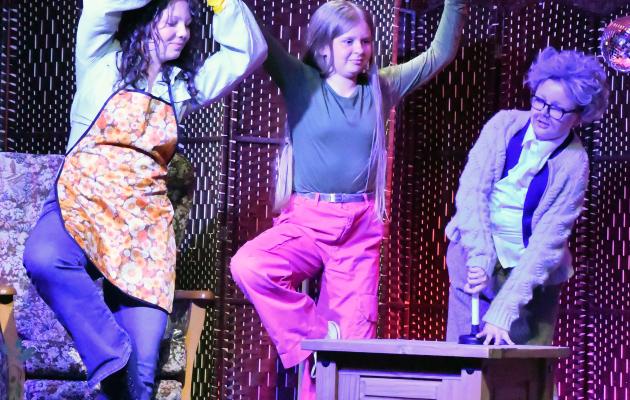
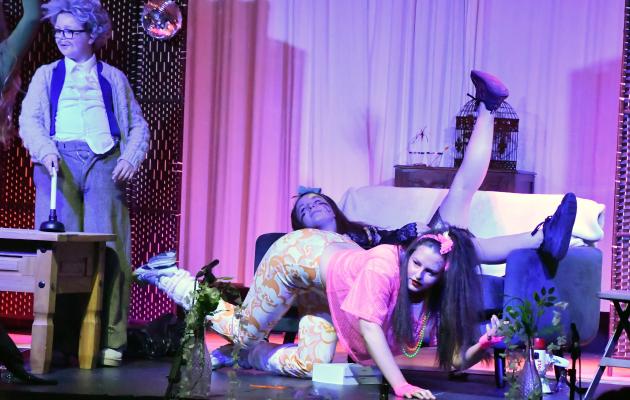
We are fully inclusive and welcome anyone, and that’s another crucial role community spaces can play, especially for young people who don’t necessarily fit into more traditional activities. We run weekly term-time sessions for children from P1 through to S6, with two or three productions a year involving young people, often alongside adult community theatre. For many of our members, the hall becomes a second home.
Also the fact that my daughter Kirstie, and I run the group together, with brilliant voluntary committee members, means there is a multi-generational aspect to our provision.
Kirstie’s decision to return to Strachur after leaving to study Performing Arts, and raise a family, has been based largely on her positive experience of growing up around Strachur and her time in the hall. It is of the greatest benefit to our drama group as she brings her passion for performing arts with her, (and also my grandson, so selfishly, couldn’t be more delighted).
For me, the key message is this. Community spaces don’t just host activities. They shape confidence, belonging and identity. If young people feel welcome, valued and supported, particularly in the 17 to 19 age range, they are far more likely to carry that sense of belonging into adulthood.
Community spaces shape how young people see themselves – and when they feel they belong, that sense of belonging stays with them for life.